Strong brand, cheap performance: what happens when you turn the ads off
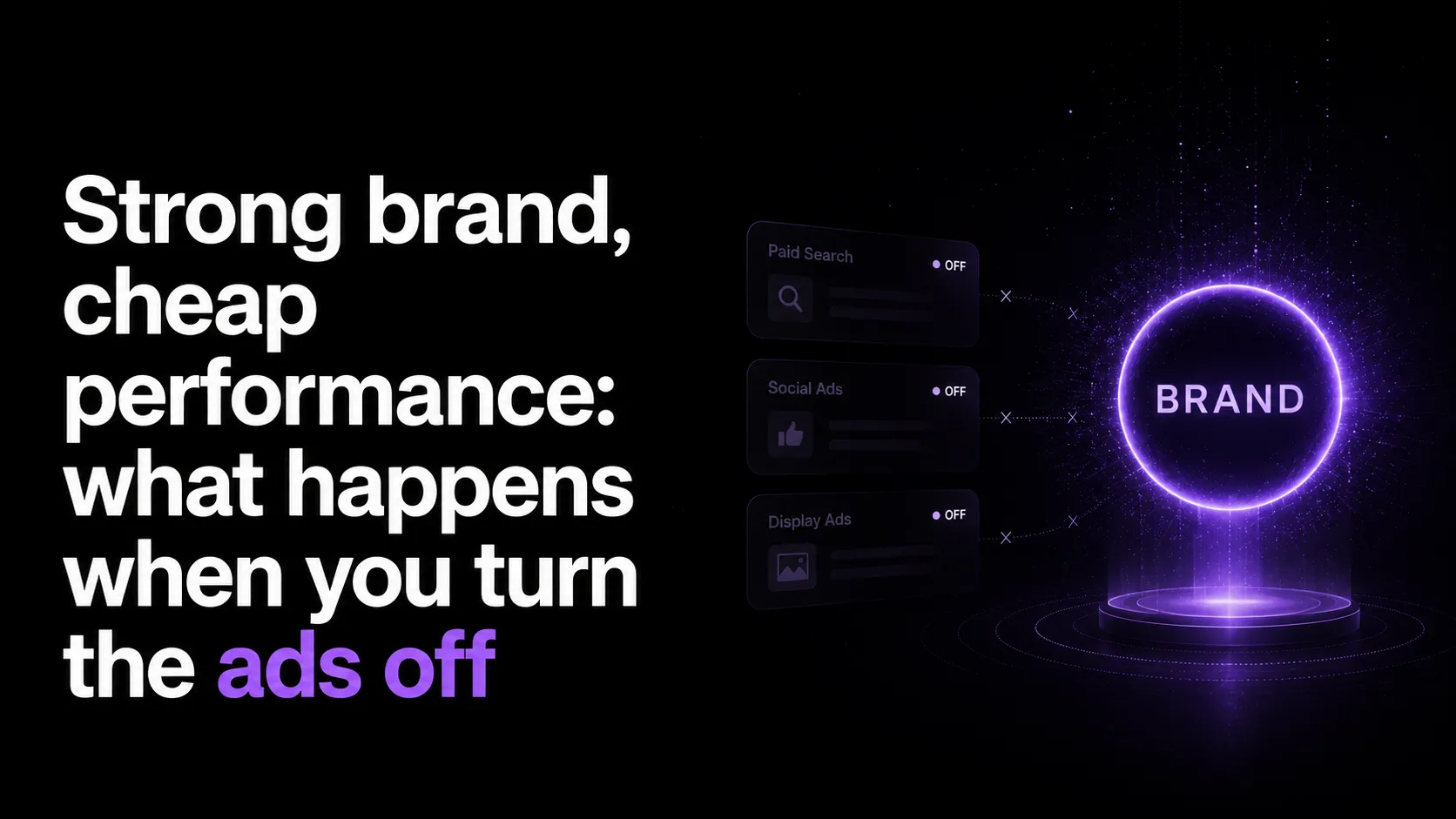
The test nobody wants to run
There's a simple way to find out how much brand a company actually has: turn everything off for a month. No ads, no promotions, no retargeting. Then watch what happens.
For many mid-size brands the answer is brutal. Traffic drops to a trickle, conversions approach zero, and the pipeline empties in weeks. Everything the reports called growth turns out to have been rented.
Nobody runs this test on purpose. But budgets get cut, platforms change rules, and accounts get suspended. Sooner or later the test runs itself.
Two conversions that look identical
In the analytics, a conversion is a conversion. The report doesn't distinguish between someone who clicked an ad and someone who typed the brand's name because they already trusted it.
The difference only appears over time. The first conversion was bought, and it has to be bought again every single time. The second one was earned, and it repeats on its own: the person returns, recommends, searches for the brand by name. Same row in the dashboard, completely different economics.
Performance marketing produces the first kind at scale. That's its job and it does it well. What it cannot do, at any budget, is produce the second kind. Belief is not for sale on any ad platform.
Why the machine keeps eating the budget
The migration toward performance isn't a strategy. It's an accounting artifact.
Performance is measurable, immediate and attributable. Brand is slow and diffuse. Attribution models give full credit to the last click and zero credit to the years of consistency that made the click cheap. So when budgets tighten, the money flows to what can prove itself by Friday.
Then acquisition costs start creeping up, because the audience saturates and nothing external is making the brand easier to sell. And the standard response to rising costs is more budget for the machine. The loop closes, and it only tightens.
What brand means in this frame
Not awareness. Not a logo people recognize. Brand, in economic terms, is accumulated belief: a group of people who choose you without needing to be convinced from scratch each time.
You can see it in the numbers nobody optimizes: direct traffic, branded search volume, repeat purchase rate, the price premium customers accept without comparison shopping. None of those spike when a campaign launches. None of them collapse when it stops.
The question underneath the budget
The real distinction isn't performance versus brand, as if a company had to pick a side. Performance works better for companies with strong brands: their ads convert cheaper, because the persuasion happened before the impression.
The useful question is quieter. If everything paused tomorrow, what would keep coming in? That number is the brand. Everything above it is being rented, month by month, at a price that only goes up.