The hidden cost of changing agencies every two years
The refresh that never stops
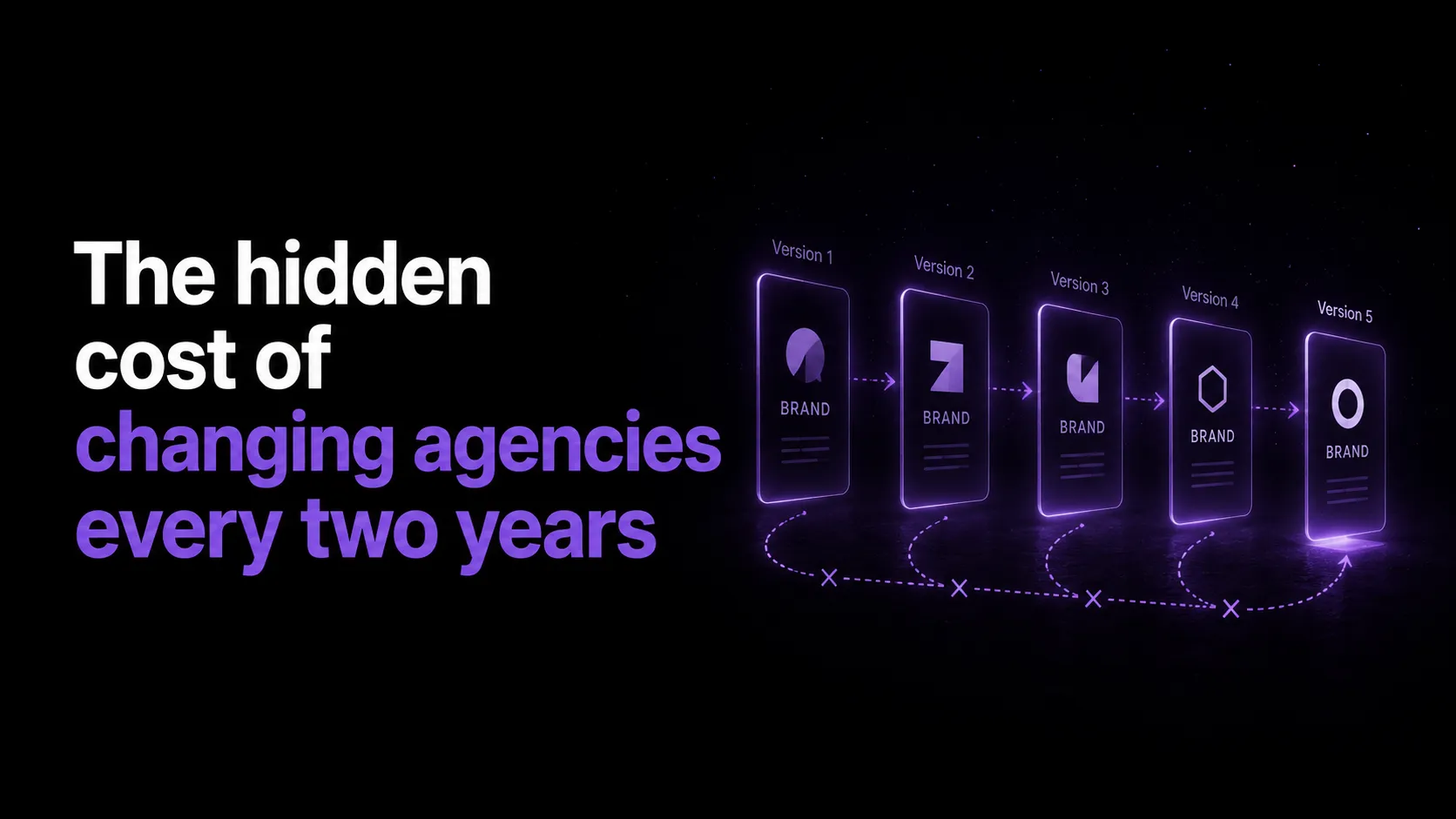
The pattern is familiar. Results plateau, the relationship wears out, someone calls for a pitch. The new agency arrives with energy and a diagnosis: the brand needs a refresh. New tone of voice, new visual direction, new strategy deck. Eighteen months later, the cycle starts again.
Each decision along the way is defensible. Agencies do go stale, and pitches do surface better thinking. What nobody evaluates is the pattern itself, because its cost never appears in any comparison.
What the market sees
Inside the company, each transition feels like progress. From the outside, the picture is different. A customer who encountered the brand three years ago and encounters it today finds a different voice, a different look, sometimes a different promise. Nothing connects the impressions. The recognition that should have been compounding across those years quietly resets instead.
Search engines register the same discontinuity. Consistency of signals over time is part of how a brand becomes a clear entity: the same descriptions, the same positioning, the same visual and verbal identity accumulating across the web. A brand that reinvents itself every two years keeps interrupting its own record. It stays perpetually new, in the worst sense.
Why every cycle produces a reinvention
No agency wins a pitch by proposing continuity. "Keep doing what the last agency did, but execute it better" is often the honest recommendation, and it's commercially unsayable. New agencies need visible change to justify their fee and their win, so the incentive always points toward reinvention, whether the brand needs it or not.
The client side has its own version. New marketing directors want their own era. Procurement treats agencies as interchangeable suppliers, so relationships are structured to be short. Everyone behaves rationally, and the sum is a brand that never holds a direction long enough to own it.
What continuity actually compounds
The brands people can describe without looking (the same voice for a decade, the same colors, the same idea repeated with discipline) didn't get there through better campaigns. They got there by refusing to reset. Distinctive assets need years of repetition before they belong to the brand. Familiarity, the thing that makes ads convert cheaper and shelf presence work, is built encounter after consistent encounter.
None of that survives a rotation habit. And its absence is invisible in the short term, because campaigns keep running and metrics keep moving.
The question to ask before the next pitch
Sometimes changing agencies is the right call. The useful discipline is separating two decisions: does the execution need to change, or does the brand? The first is a supplier decision. The second is a strategic one, and it shouldn't be made by whoever happened to win the room that day.
An agency should be replaceable. The brand's direction shouldn't be.